How Kundalini Yoga Supports Trauma Release
Table of Contents
- 1. What Trauma Looks Like in the Body and Mind
- 2. How Kundalini Yoga Helps Release Trauma
- 2.1. 1. Breathwork Helps Settle the Nervous System
- 2.2. 2. Kriyas Release Stored Tension
- 2.3. 3. Mantras Help Calm Emotional Noise
- 2.4. 4. Meditation Helps Release Old Patterns
- 2.5. 5. Energy Movement Supports Emotional Balance
- 3. Why Kundalini Yoga Feels Safe for Trauma Release
- 4. Simple Kundalini Practices to Try at Home
Trauma often stays in the body long after the mind moves on. It can sit quietly in the breath, the nervous system, and the emotional layers, creating tension, fear, or heaviness. Many people carry these feelings for years without having a safe way to let them settle. Kundalini Yoga offers a calm and steady path for those who feel stuck in old pain.
Through simple breath patterns, mindful movements, and mantra chanting, the practice gives space for the nervous system to soften and rebuild balance. Each session guides the mind back to the present moment, allowing hidden emotions to rise and move out gently. For those seeking steady support, Kundalini Yoga can be a safe companion on the healing path.
What Trauma Looks Like in the Body and Mind
Trauma is not only a memory. It sits in the muscles, breath, thoughts, and reactions. People living with trauma may feel unsafe, restless, tired, or disconnected without knowing why. The nervous system stays alert, making the body react as if the painful event is still happening.
Common signs include:
-
Tightness in the chest, neck, or belly
-
Trouble sleeping
-
Sudden fear or emotional floods
-
Difficulty staying present
-
A sense of inner pressure or numbness
Kundalini Yoga supports these patterns by calming the breath, slowing the thoughts, and giving the body a safe place to settle. Every movement, chant, and breath pattern works like a bridge between the physical and emotional layers, making it one of the gentle forms of yoga for trauma release.

How Kundalini Yoga Helps Release Trauma
Kundalini Yoga uses a combination of kriyas, pranayama, mudras, and mantras. These practices influence the body and mind in ways that naturally support emotional balance. Many practitioners view it as one of the best yoga for releasing trauma due to its grounding effect.
1. Breathwork Helps Settle the Nervous System
Kundalini Yoga uses steady and rhythmic breath patterns that signal safety to the brain. With each slow inhale and extended exhale, the body shifts from a survival mode to a calmer state.
Breathwork helps:
-
Soften anxiety
-
Reduce emotional heaviness
-
Lower stress responses
-
Build inner stability
People who feel overwhelmed easily find breath-led practices comforting, making this deeply supportive yoga for trauma release.
Get to know: How a 7-Day Kundalini Yoga Retreat Can Change Your Life
2. Kriyas Release Stored Tension
Kriyas are guided movements combined with breath and focus. They help release the physical tightness stored during traumatic experiences. Slow rhythmic movements give the body a safe way to let go of long-held tension.
Gentle kriyas in Kundalini Yoga for trauma also enhance interoception awareness of internal bodily sensations, helping practitioners sense and release deep-seated stress safely.
Kriyas support:
-
Opening blocked energy channels
-
Releasing muscle pressure
-
Improving posture and breath flow
-
Bringing attention back to the present moment
With steady practice, many people feel lighter and clearer after each session.
3. Mantras Help Calm Emotional Noise
Chanting creates vibration in the body that relaxes the mind and quiets constant internal chatter. These vibrations soothe emotional layers stored deep within.
Mantras help by:
-
Creating a sense of inner safety
-
Redirecting the mind away from fear
-
Encouraging calm focus
-
Bringing comfort through sound
For people who struggle to sit quietly, mantras offer a gentle way to feel steady.
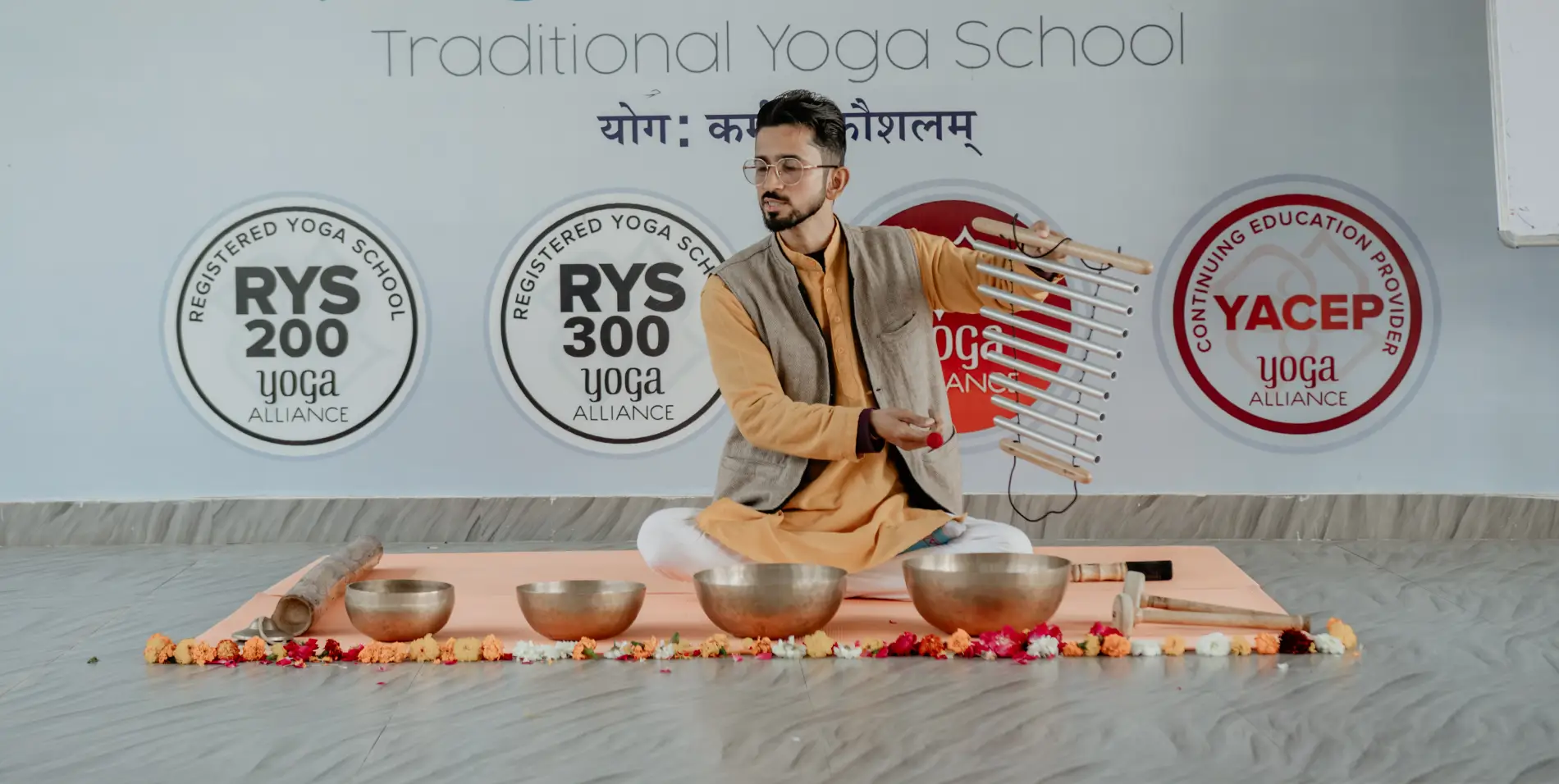
Feel the vibrations, calm the mind, and see why music and gong baths matter in Kundalini practice.
4. Meditation Helps Release Old Patterns
Meditation in Kundalini Yoga guides the mind through breath and sound. Trauma often creates repeated thought loops that feel difficult to interrupt. Meditation slows the mind so old patterns lose intensity.
Benefits include:
-
Increased mental clarity
-
Reduced emotional reactivity
-
More steady decision-making
-
Better connection to inner feelings
Over time, meditation helps the mind relax into a softer state.
5. Energy Movement Supports Emotional Balance
Kundalini Yoga is known for awakening energy flow along the spine. Trauma often disrupts this flow, creating heaviness or emotional blocks. Gentle spinal movements, breath, and chanting help release trapped energy.
This supports:
-
A sense of inner flow
-
Emotional stability
-
Better focus and awareness
-
A calmer connection with oneself
Consistent practice helps bring the mind and body into a more balanced state.
Learn how a Kundalini Yoga retreat awakens your inner energy and calms your mind.
Note: When the body holds onto old stress, a focused Kundalini retreat can help release it through breath, movement, and mantra. Each day offers simple practices that promote calmness and a sense of inner safety. At Rishikesh Traditional Yoga School, our 3-day, 5-day, and 7-day Kundalini yoga retreats provide a steady, nurturing space for trauma release. Book your Kundalini yoga retreat now and take a step toward lighter living.

Why Kundalini Yoga Feels Safe for Trauma Release
1. Slow and Steady Pace: Kundalini Yoga practices do not rush the body. The pace is slow, giving safe space for emotions to surface without pressure.
2. No Need to Share Personal Stories: People can work through trauma without speaking about the past. The practice itself helps release emotional load naturally.
3. Supportive Breath-Led Movements: The combination of breath and movement creates a sense of safety that helps the nervous system relax.
4. Accessible for All Levels: Even beginners can practice Kundalini Yoga. The focus is on presence, not perfection.
Related Articles:
Yoga for Mental Health – Top 5 Yoga Poses for Stress Relief
What Mistakes Should You Avoid While Balancing Chakras with Yoga?
How does yoga detox your body?
Simple Kundalini Practices to Try at Home
These easy techniques offer a soft start for emotional balance:
1. Long Deep Breathing: Sit with a straight spine. Inhale slowly through the nose, allowing the belly to rise. Exhale fully. Continue for 3–5 minutes.
2. Sat Nam Mantra: Chant “Sat Nam” softly while breathing slowly. Let the sound vibrate through the chest.
3. Spinal Flex: Sit cross-legged. Inhale and push the chest forward. Exhale and round the spine. Move slowly with the breath for 2 minutes.
4. Shoulder Rolls: Roll your shoulders backwards and forward in slow circles to release stored tension.
Healing takes time, and each person moves at their own pace. Kundalini Yoga offers steady tools that calm the nervous system, release tension, and bring the mind back into balance. With consistent practice, the body slowly lets go of pressure that has been held for years. This soft release creates space for a calmer, more grounded way of living.
If you wish to move forward with a supportive practice, Kundalini Yoga can be a gentle and steady guide along your path.