
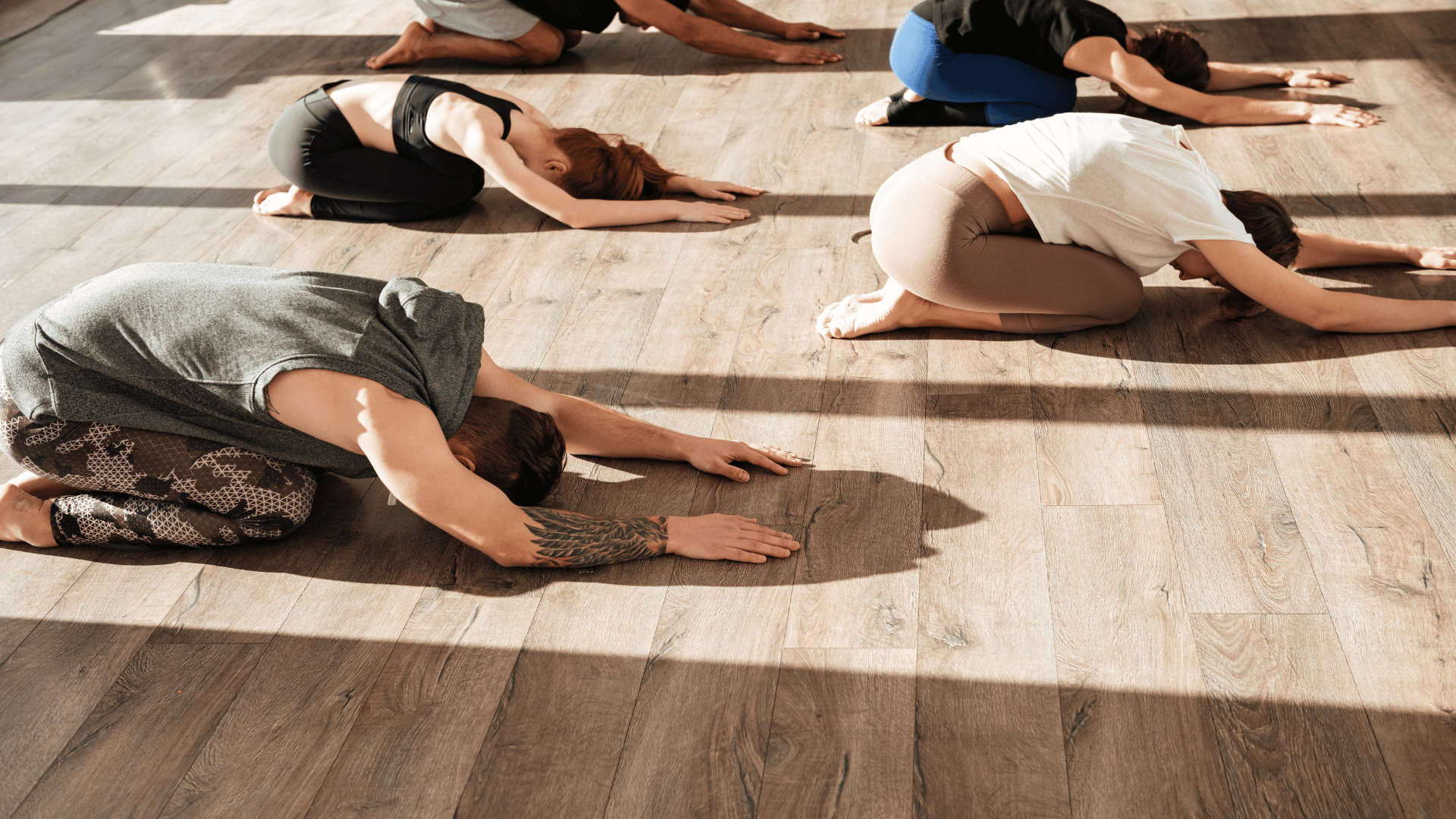
Do you ever feel like your mind is carrying more than it can handle? Stress builds up quietly, and yoga offers a gentle way to release what feels heavy. Many people look for simple methods to calm their thoughts, ease tension, and feel steady again.
Yoga brings the mind and body together through soft movements and slow breathing, helping you settle into a more peaceful state. Even a short session can make a noticeable difference in how you feel, making it one of the most supportive practices for mental health.
Below are simple poses that support mental balance, melt tension, and guide the mind toward calmness. These poses are safe, slow, and supportive for beginners as well.
How Does Yoga Help Mental Health?
Yoga is more than stretching or building flexibility. Its slow pace and mindful breathing help reduce the rush of thoughts and quiet the inner noise that builds up through the day. Stress often shows up as tight shoulders, heaviness in the chest, a restless body, or an uneasy mind. Yoga helps release these signs by softening the breath, opening the body, and slowing the mind.
When you breathe slowly, the nervous system shifts into a calmer state. Muscles begin to relax, the heartbeat stabilises, and the mind feels lighter. Even 10 minutes of gentle yoga can reduce stress levels. Regular practice builds resilience, helping you handle emotions with more steadiness.
To learn how yoga supports flexibility in the body, read Does Yoga Help with Flexibility? Benefits and Beginner Tips.
Yoga Poses for Stress Relief
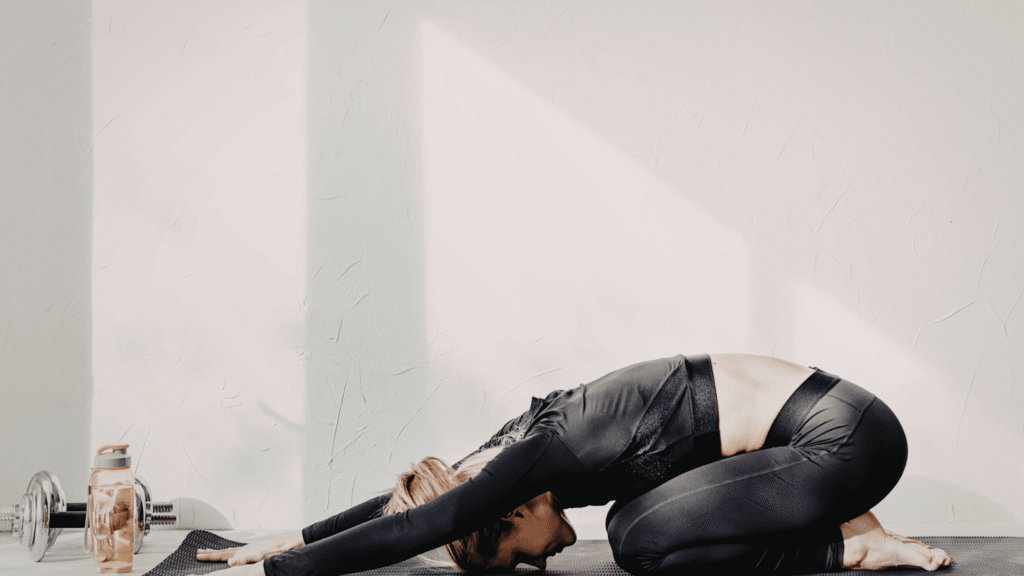
1. Child’s Pose (Balasana)
Child’s Pose is one of the most soothing positions for calming an active mind. It releases tightness in the back, shoulders, and chest, which often become tense during stressful moments.
How It Helps
- Softens the breath
- Allows the mind to settle
- Relaxes the spine
- Creates a sense of grounding
How to Practice
Sit on your knees, bring your forehead to the floor, and place your arms forward or to the sides of your body. Breathe slowly and stay for at least one minute. The gentle pressure on the forehead gives a calming effect and helps quiet mental chatter.
If you want to learn how yoga supports cleansing and renewal, you can read our blog How does yoga detox your body?
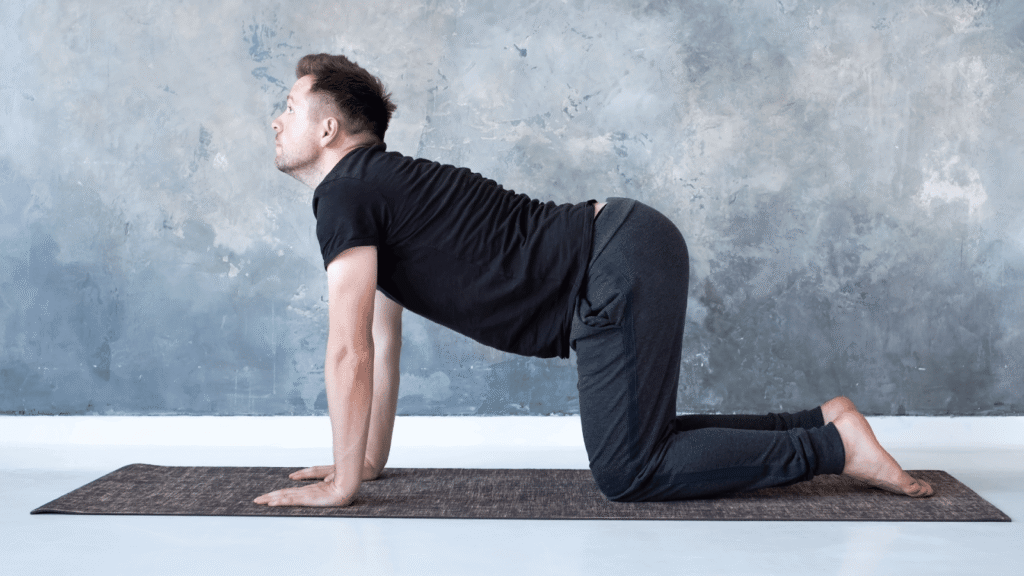
2. Cat–Cow Pose (Marjaryasana–Bitilasana)
This flowing movement is excellent for releasing stress stored in the spine. The slow rhythm of arching and rounding the back unlocks stiffness and supports better breathing.
How It Helps
- Loosens tight muscles in the back
- Improves breath flow
- Eases tension around the neck and shoulders
- Brings gentle movement that supports emotional release
How to Practice
Start on your hands and knees. Inhale as you lift your chest and tailbone into Cow Pose. Exhale as you round the spine into Cat Pose. Repeat for one to two minutes with soft breath. The movement helps circulate energy and creates a peaceful rhythm in the body.
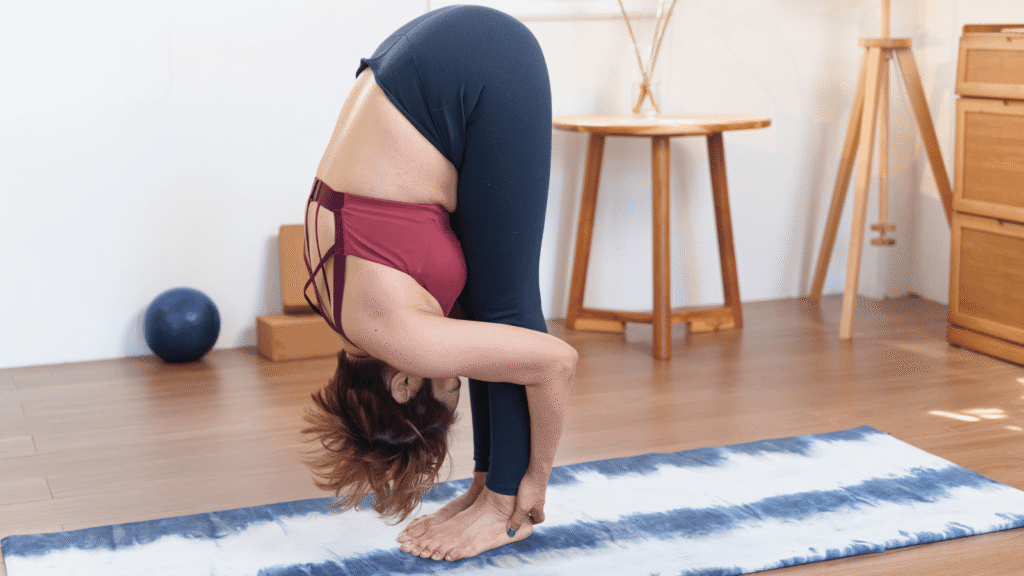
3. Standing Forward Bend (Uttanasana)
Forward bending has a naturally calming effect on the mind. It also releases the hamstrings, lower back, and upper back—areas that carry stress.
How It Helps
- Supports blood flow to the brain
- Softens tight hamstrings
- Relaxes the spine
- Reduces heavy mental pressure
How to Practice
Stand with your feet hip-width apart. Fold forward from the hips and let your head hang freely. Bend your knees if needed. Hold your elbows or allow your arms to rest on the floor. Stay for 30 to 60 seconds. The gentle inversion encourages a quiet mind.
Find your inner balance with the 100 Hour Yoga Training in Rishikesh and bring gentle relief to a busy mind.
4. Legs-Up-the-Wall Pose (Viparita Karani)
This pose is widely known as a natural stress reliever. The passive position calms the nervous system, rests the legs, and supports deep relaxation.
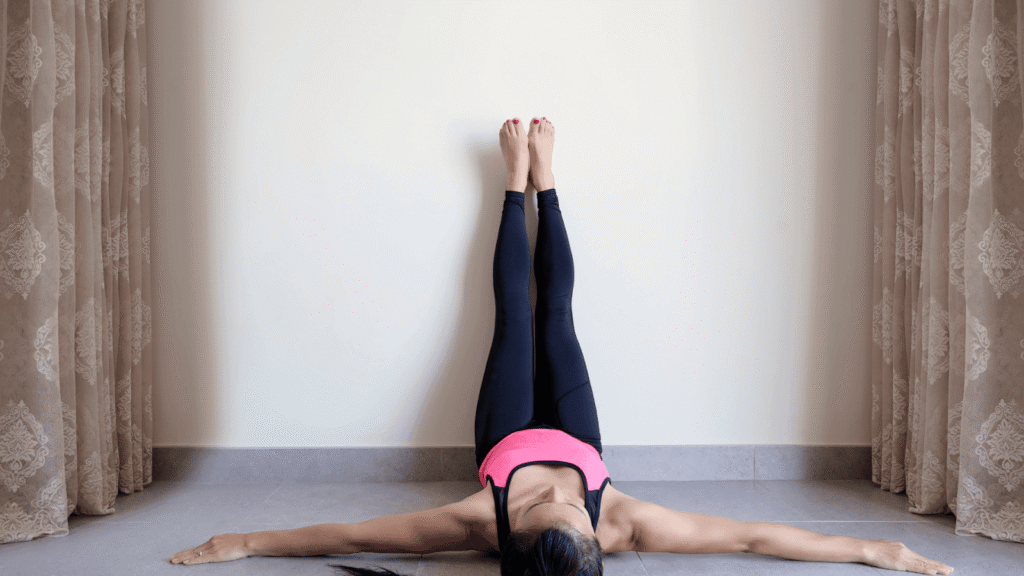
How It Helps
- Reduces fatigue
- Supports gentle blood circulation
- Calms the mind
- Eases anxiety and restlessness
How to Practice
Sit sideways near a wall. Swing your legs up as you lie down on your back. Keep your arms relaxed beside your body. Close your eyes and stay for 3 to 5 minutes. This pose is especially helpful at the end of a long day.
5. Corpse Pose (Shavasana)
Shavasana is a final resting pose practised at the end of many yoga sessions. It helps absorb the benefits of the practice and gives the mind a chance to fully settle.
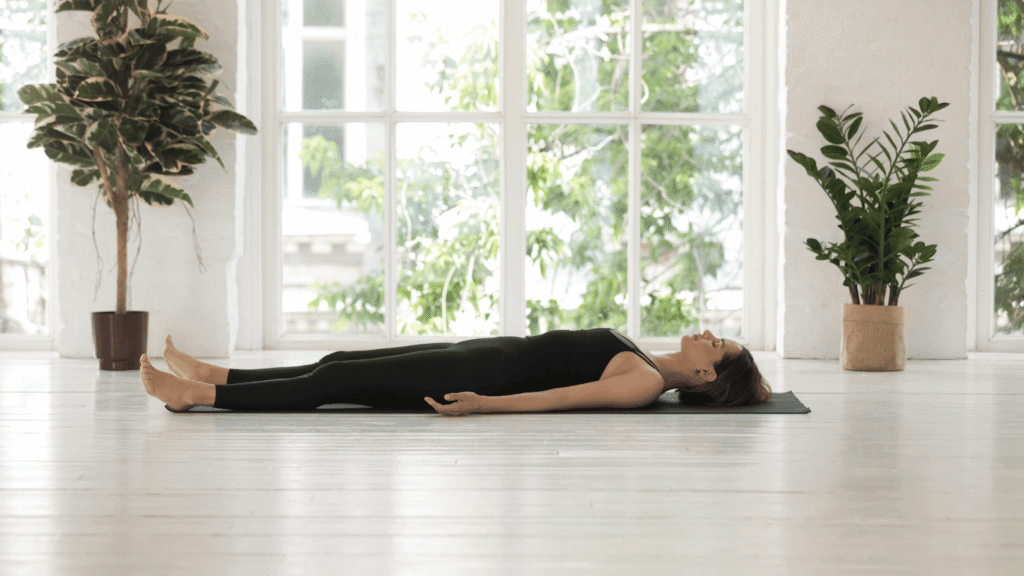
How It Helps
- Deep relaxation for mind and body
- Calms the nervous system
- Releases mental strain
- Builds emotional balance
How to Practice
Lie down on your back with your arms and legs comfortably apart. Let your breath be natural. Allow the body to relax completely. Stay for 5 to 10 minutes. This stillness helps the mind feel light and clear.
Yoga for stress relief is your small daily pause that brings big peace.
Relax your mind and reset your energy through the 50 Hour Yin Yoga Training in Rishikesh.
Breathing Techniques for Extra Calmness
Adding simple breathwork can improve the stress-relief benefits of these poses:
- Slow Breathing: Inhale for 4 counts, exhale for 6 counts. This longer exhale supports relaxation.
- Deep Belly Breathing: Place a hand on your belly and breathe slowly so the hand rises and falls. This soft movement calms emotional tension.
- Alternate Nostril Breathing (Nadi Shodhana): This steady technique balances the mind and gently eases anxiety.
Practising these breaths before or after the poses helps reduce stress more effectively.
Related Articles:
How a Yoga Meditation Retreat Can Improve Your Focus
How Yin Yoga Supports Mental and Emotional Well-Being
7 Signs You Need a Yoga Retreat
How Does Rishikesh Traditional Yoga School Support Your Mental Well-Being?
If you want to learn yoga in a calm and supportive environment, Rishikesh Traditional Yoga School offers guided sessions, teacher training, and retreats that help you build a steady mind and a relaxed body.
Our teachers guide you with simple methods and slow practice so you can release stress naturally. We focus on breathwork, basic asanas, meditation, and grounding techniques that support a centred and peaceful state.
You can join us for short programs, retreats, or training courses based on your goals. Practising in a peaceful setting like Rishikesh helps you connect more deeply with your practice, making stress relief easier and long-lasting.
Tips to Practice Yoga for Mental Health
- Practice in a quiet space
- Keep the poses gentle and slow
- Focus on breathing rather than perfect alignment
- Avoid rushing
- Practice at the same time each day if possible
Yoga does not require special skills. Simple and steady practice is enough to feel the benefits.
Stress may come and go, but yoga gives you a way to handle it gently. With these five poses, Child’s Pose, Legs Up the Wall, Cat–Cow, Forward Fold, and Shavasana, you can calm your mind, slow your breath, and bring more ease into your day. Start with a few minutes, stay steady, and let your practice grow naturally.